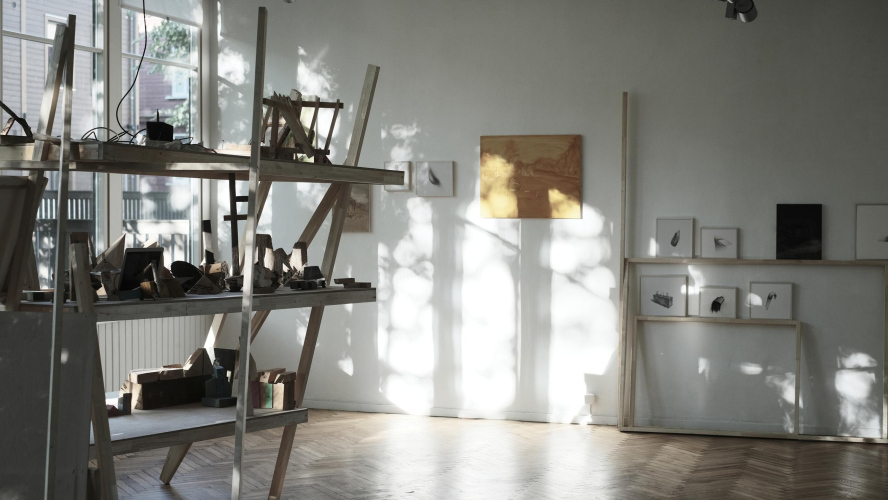
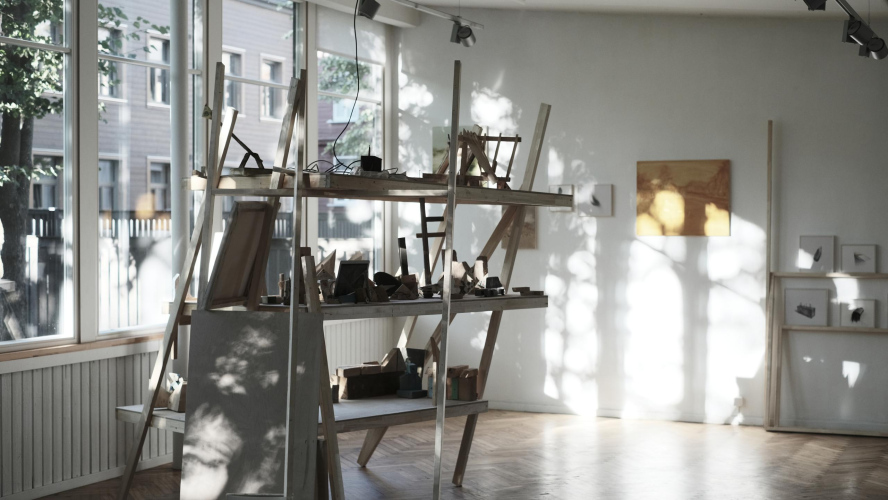
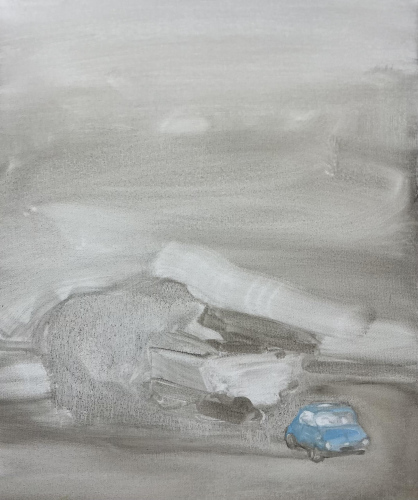
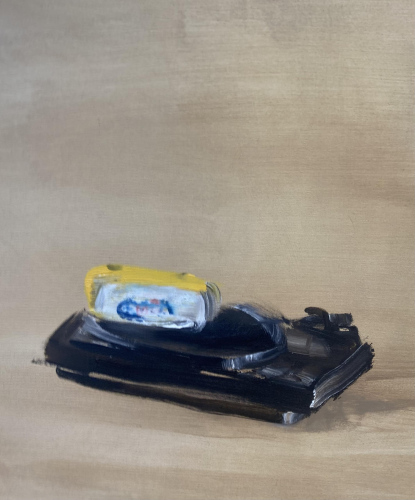
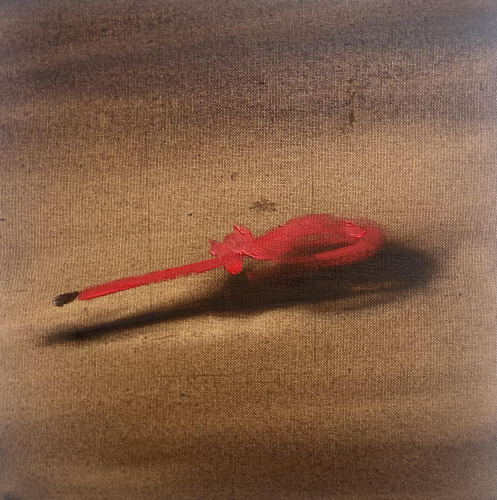
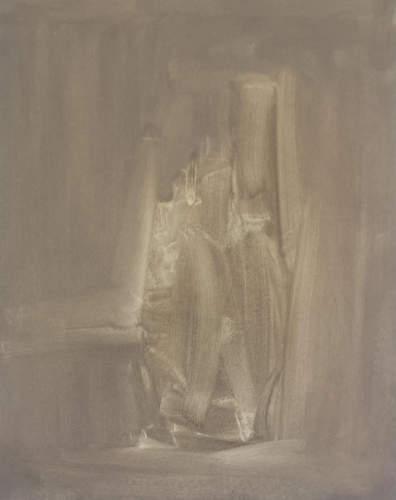
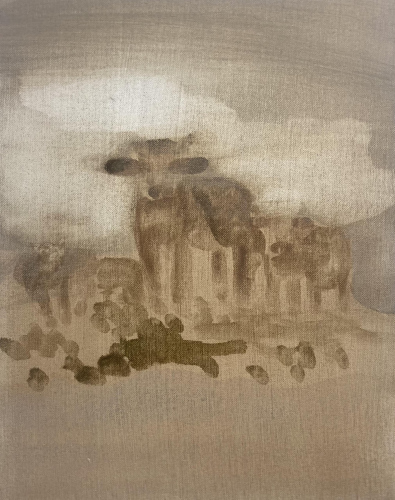
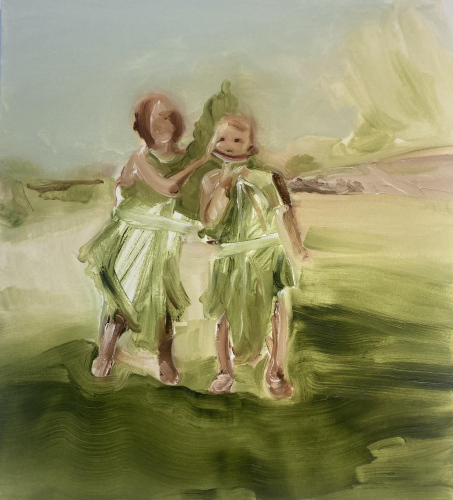
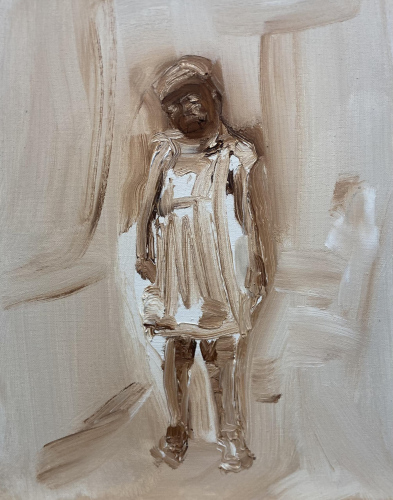
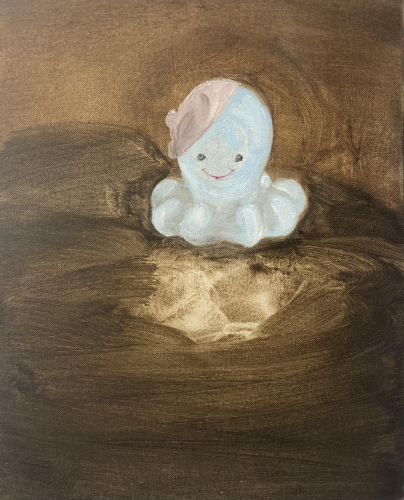
Crossing the borders between art and everyday practices, work and play, action and observation, the exhibition The Organizer takes us through a meditative yet playful journey through life as seen by the artists. Kate Krolle and Reinis Bērziņš turn to painting, drawing, and installation to capture the flow of life in their countryside home.
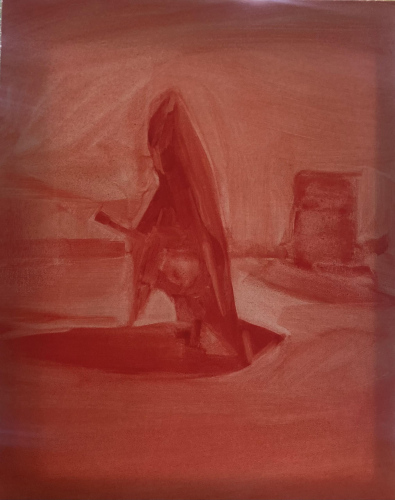
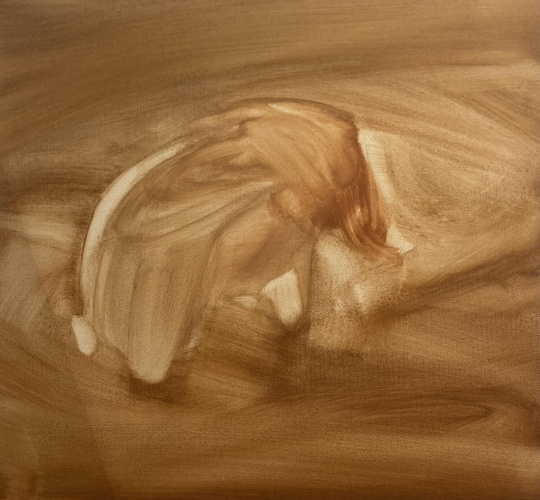
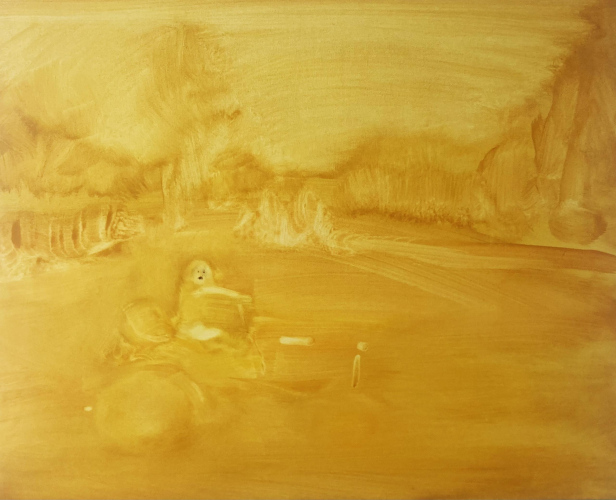
The exhibition consists of several parts, grouping paintings, drawings, and installations into sections that explore themes such as countryside landscapes, still lives with tools, and portraits of their children.
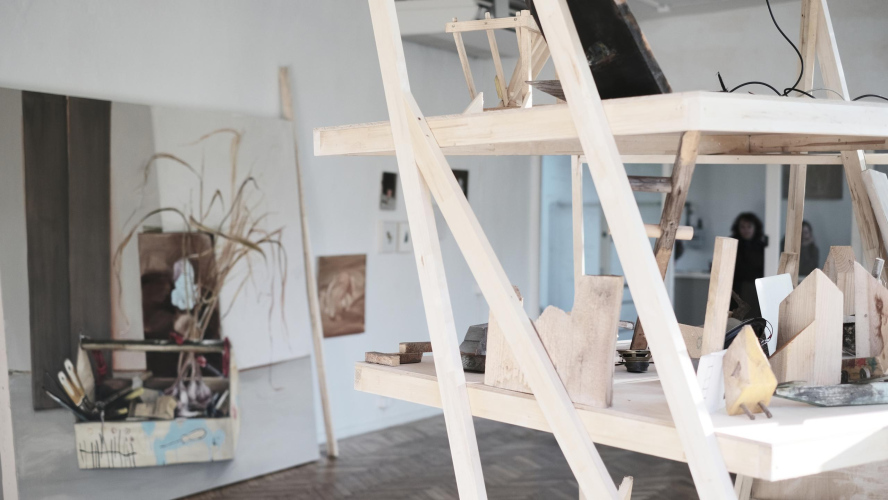
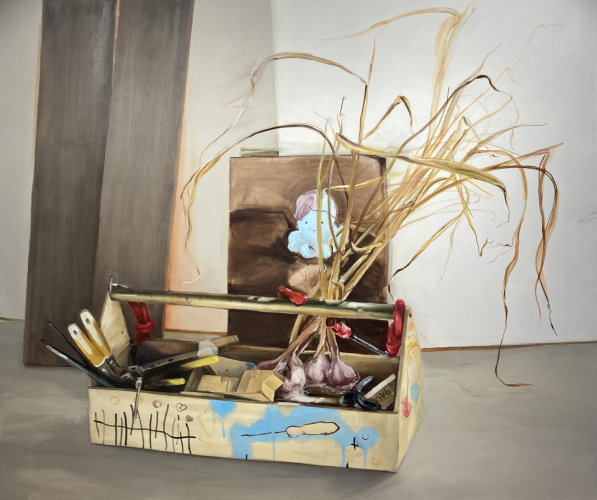
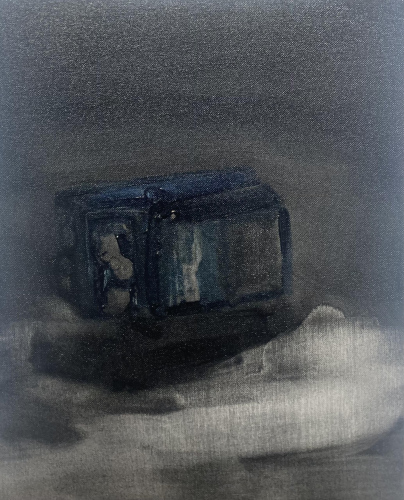
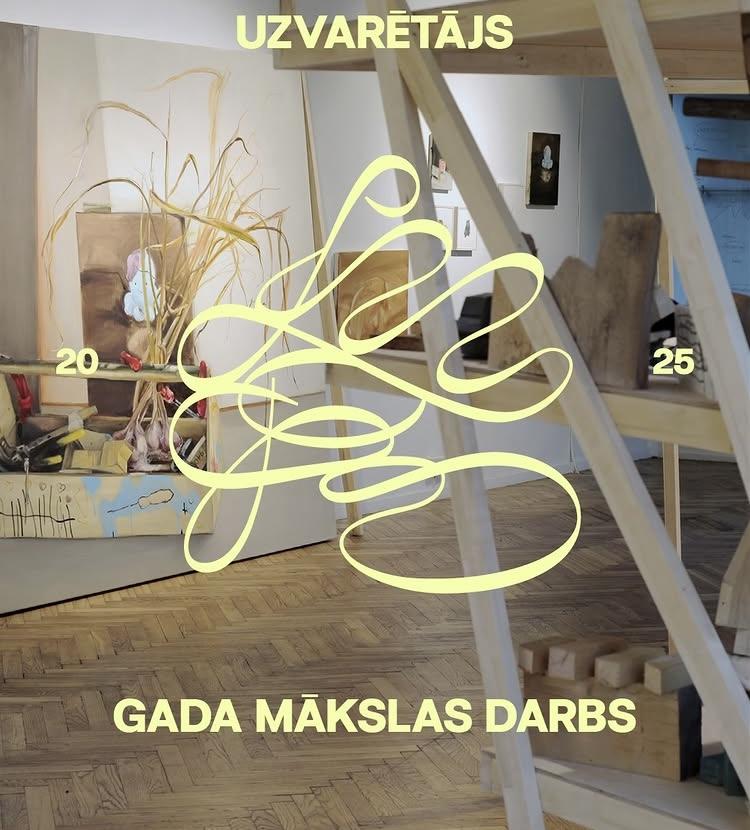
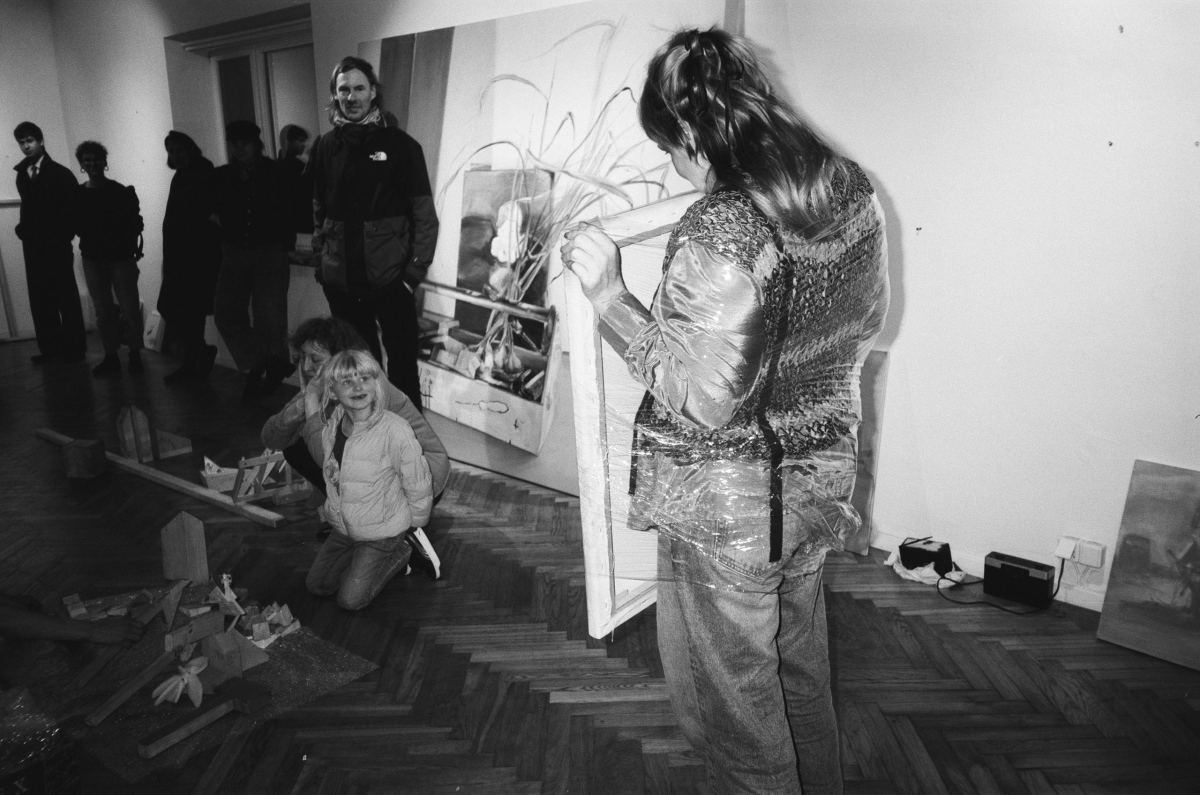
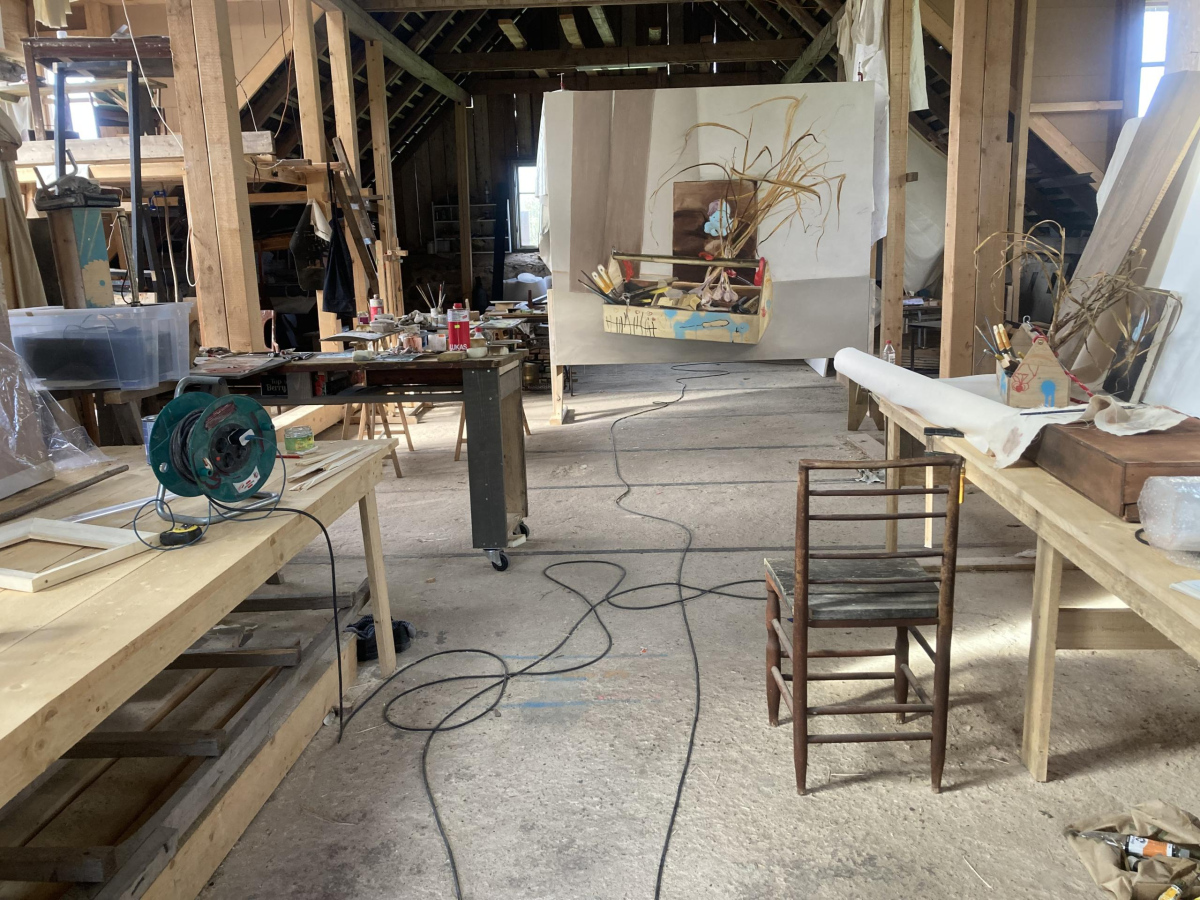
The capturing of everyday phenomena becomes the central motif. Objects seem to live their own lives and participate in the artists’ world as entities with multiple meanings, defying stable semiotic relations. For example, a toolbox within a painting reveals itself as a poetic presence, evoking a sense of life’s constant movement. This unfathomable flow does not leave the viewer merely with a disturbed sense of reality and practicality; rather, it directs attention to observation itself – not as a static act of looking, but as an artistic method. It is a method that distances itself from intentional seeing, allowing space for seemingly aimless looking.
The American artist and theorist Allan Kaprow (1927–2006) described such an approach as nonart, which anticipates the artist’s (or nonartist’s) withdrawal from viewing artwork as a fixed product, instead embracing it as an ongoing practice, a way of life. In Kaprow’s view, the borders between art and everyday life should blur to emphasize the importance of process in artistic practice.
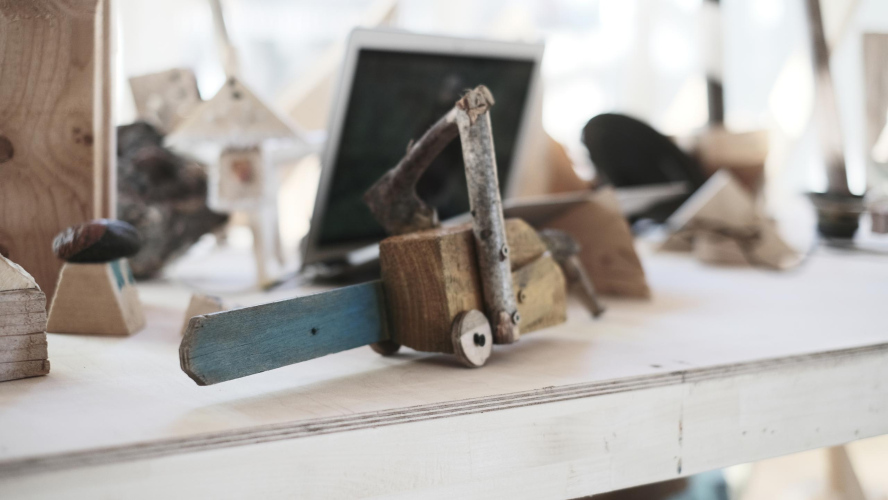
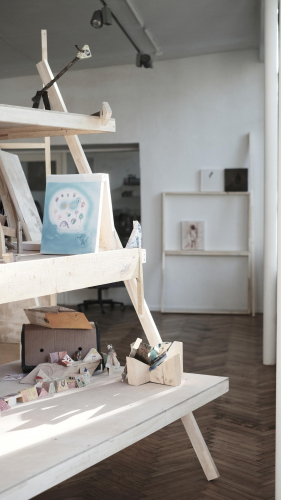
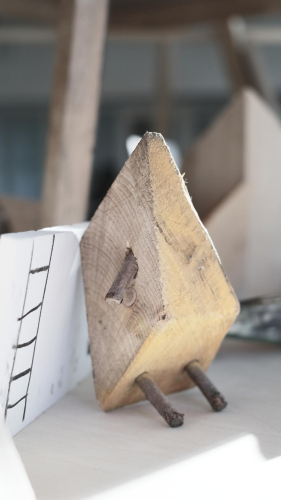
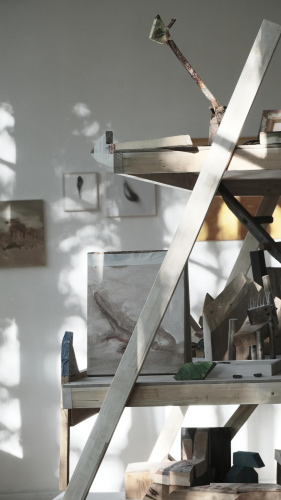
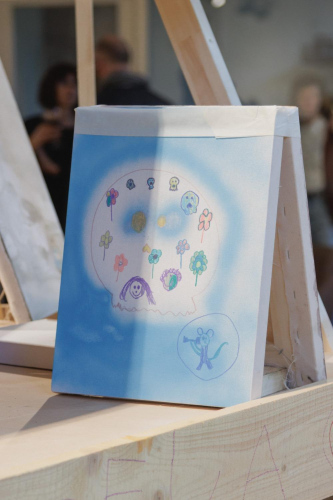
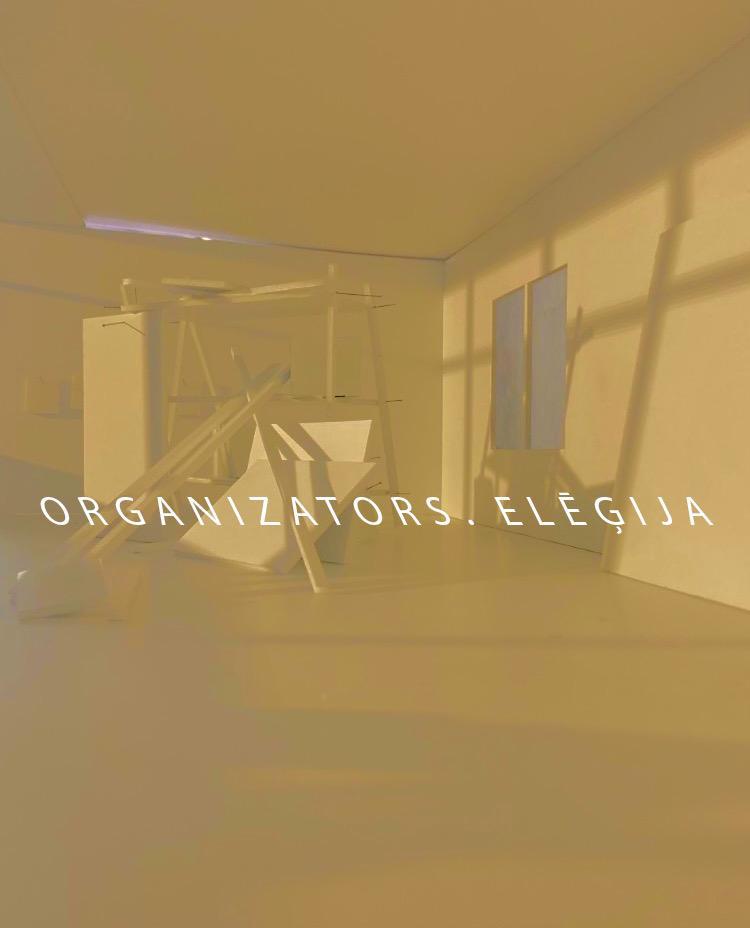
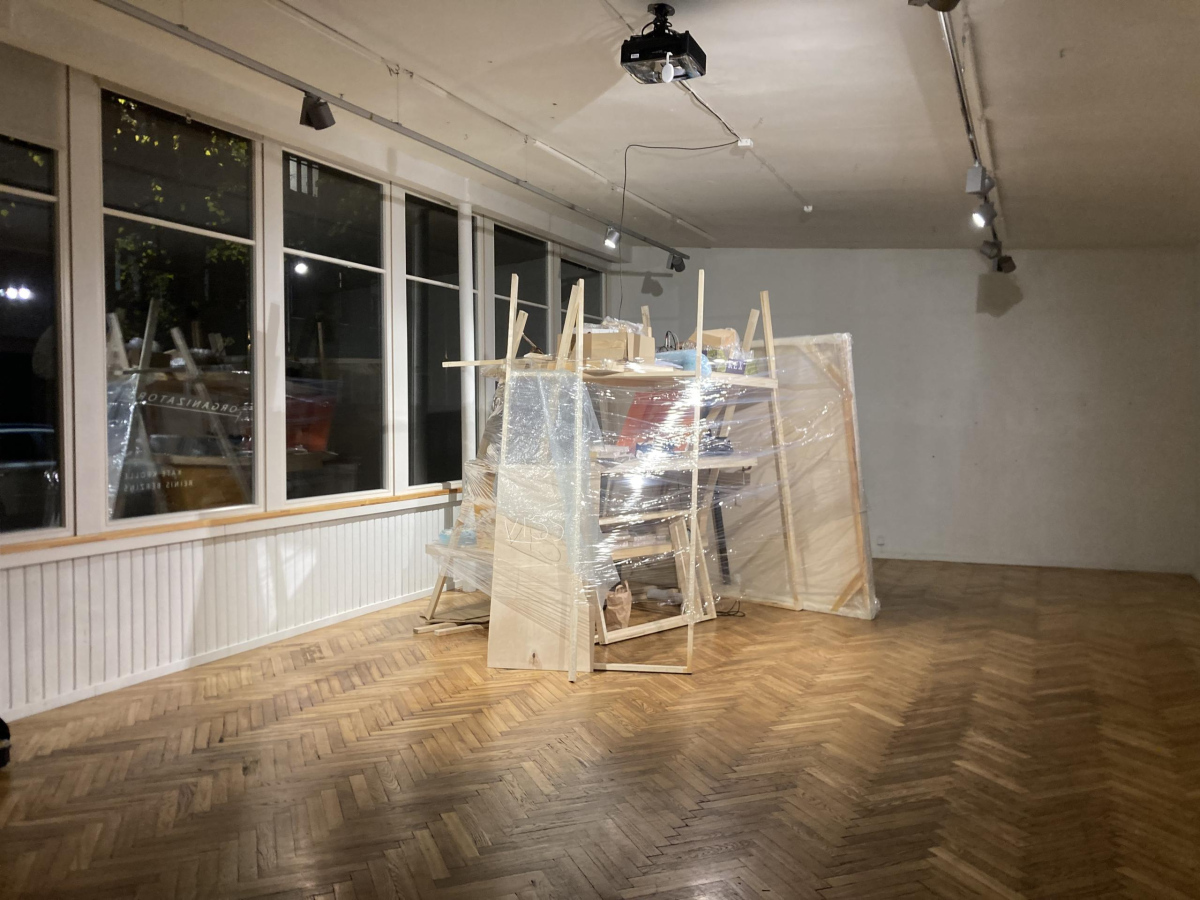
Kate and Reinis embody this approach through a playful wandering between themes and media in their exhibited works. Hence, the exhibition’s title, The Organizer, gains a new meaning, suggesting a form of organization that emerges from apparent chaos. The exhibition’s central piece – a large, hand-crafted, shelf-like structure filled with seemingly chaotic array of objects such as wooden bricks shaped like pizza slices, paintings, and car models – invites the realization that aimlessness can uncover the absence of boundaries in art, leading to an open, ongoing, and fulfilling creative process.
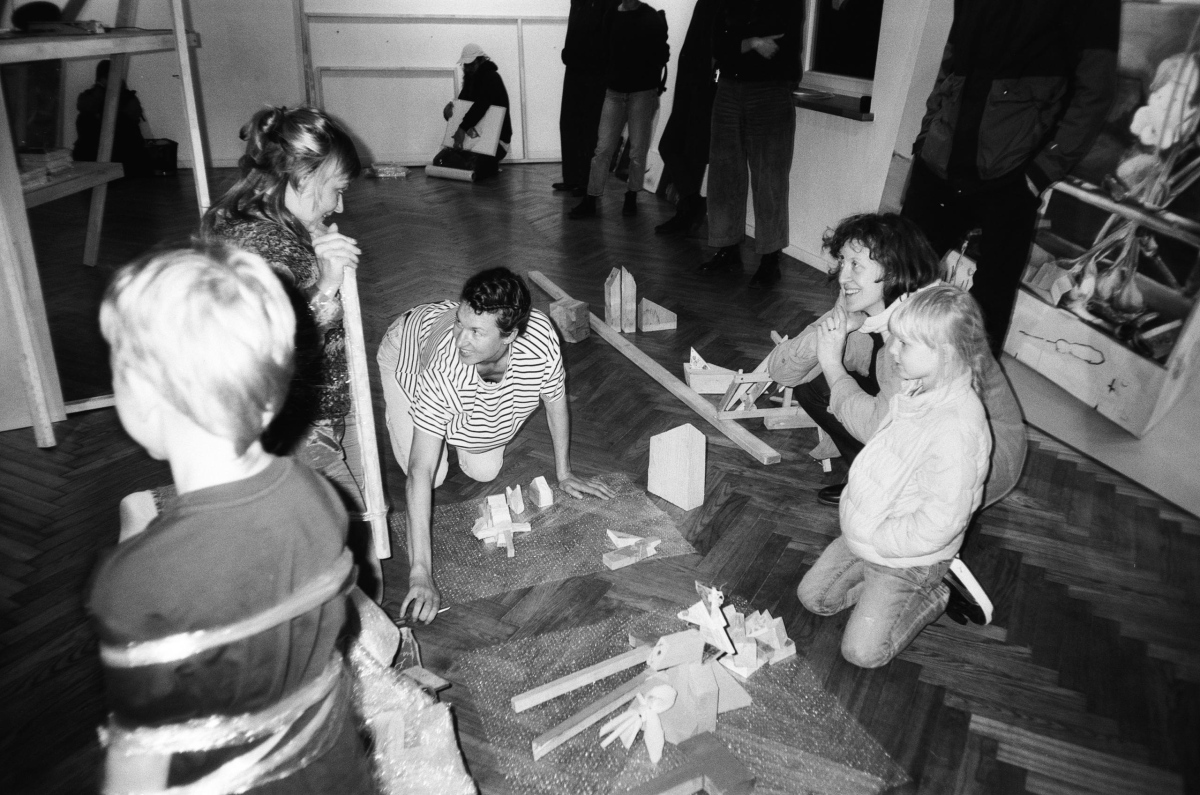
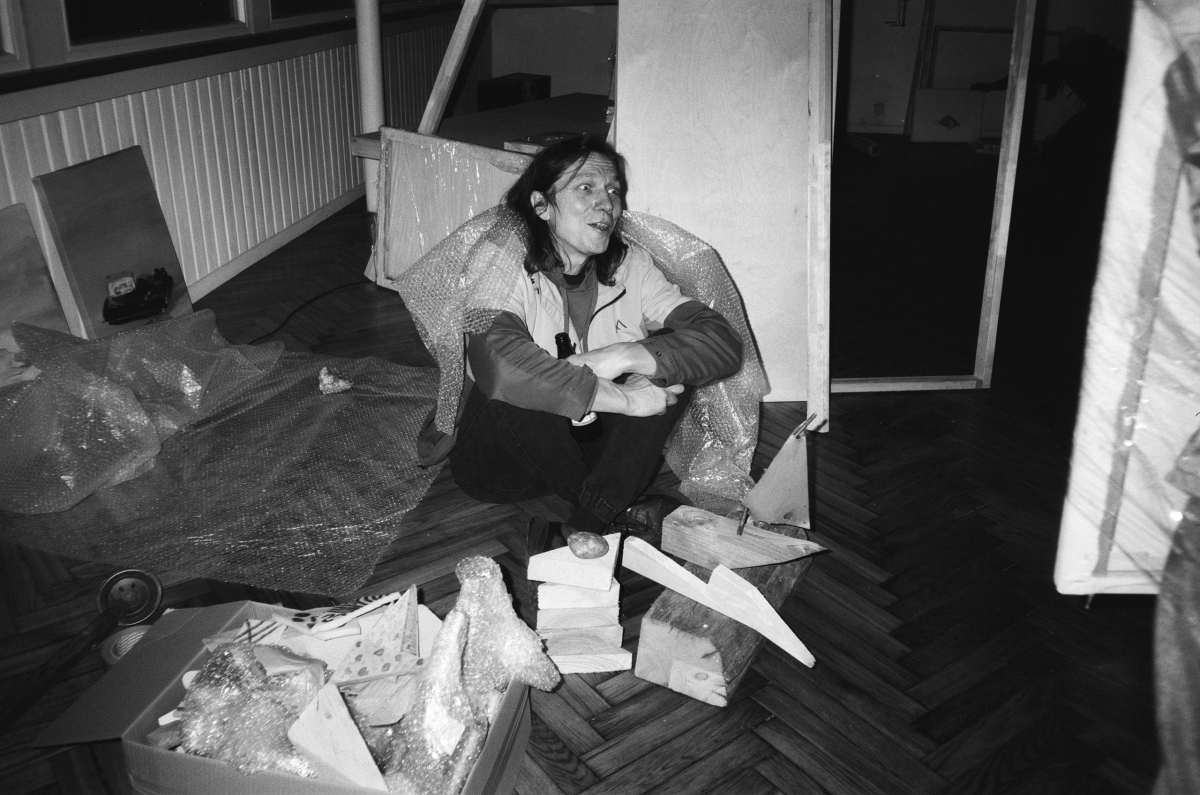
Importantly, the artists’ children also participated in creating these objects. Along with the absence of title and name cards beside the works, this collaboration dissolves traditional notions of authorship. The works are created collectively, foregrounding observation and play rather than predetermined concepts.
Amid themes of playfulness, observation and the fixation of the everyday, the exhibition also highlights anti-productivity as a fertile artistic stance. The culture of productivity that surrounds modern society imposes a false dichotomy between time for work and time without work, the so-called free time. Instead of reinforcing this division through the production of “useful” art, The Organizer reveals a process in which art manifests in its purest form – as a space where impulses lead to true creativity, planting the seed for a beautifully complex intertwining of art and life.
By distancing itself from the constant noise of productivity, The Organizer becomes a portal to a more sensitive, more meaningful mode of life, grounded in attentive observation of the little things to which art must endlessly return.
Written by Elizabete Vuškāne
https://echogonewrong.com/escaping-productivity-the-everyday-poetics-of-the-organizer/